Grow Your Agency Without Losing The Relationship
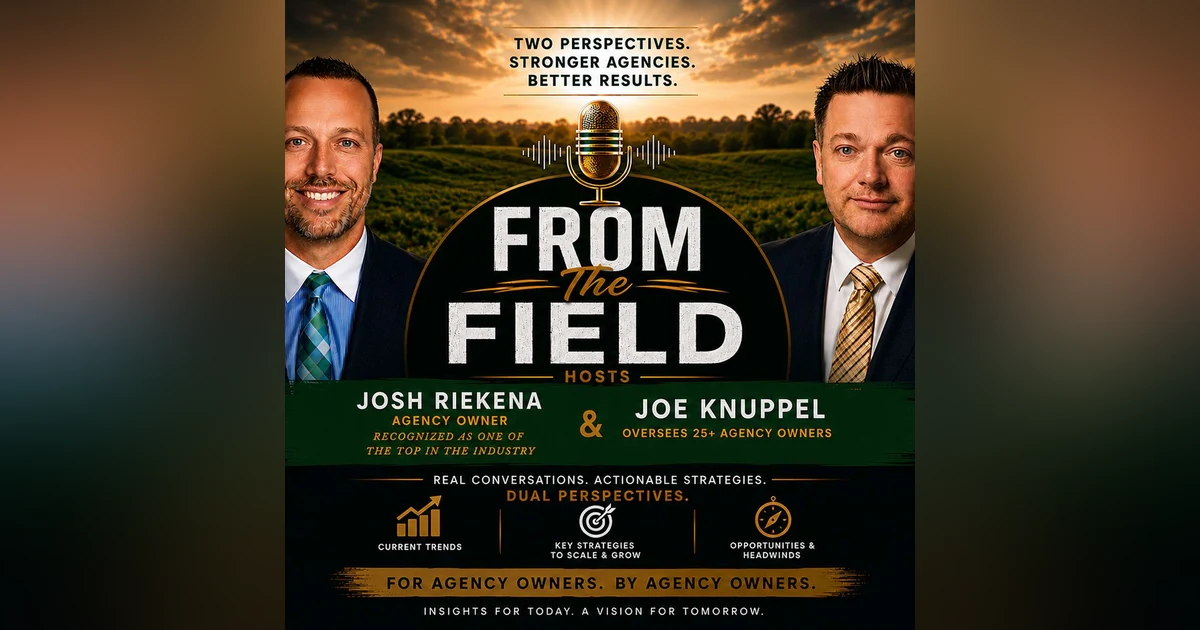

You started with 40 clients and gave everyone your cell phone. Now you've got 400 and the phone won't stop ringing. Joe and Josh dig into the real question every growing agency owner faces: can you scale from 100 households to 2,000 and still feel personal? Josh says yes — but only if you put the client at the center, set clear rules of engagement from day one, and build an onboarding process that tells people exactly who to contact for what. They break down Josh's six-to-seven touchpoint sys...


You started with 40 clients and gave everyone your cell phone. Now you've got 400 and the phone won't stop ringing. Joe and Josh dig into the real question every growing agency owner faces: can you scale from 100 households to 2,000 and still feel personal? Josh says yes — but only if you put the client at the center, set clear rules of engagement from day one, and build an onboarding process that tells people exactly who to contact for what. They break down Josh's six-to-seven touchpoint system (powered by an automated engagement matrix), the car dealership analogy for when clients demand the owner, who should actually be doing annual reviews, and why "I never hear from my agent" is still the #1 reason people transfer.
Timestamped Chapters:
- 0:00 — Show Intro
- 0:13 — The Evolution Question — Can you go from 100 to 2,000 households and still be personal? Joe sets the stage
- 1:22 — Client at the Center — Josh's answer: yes, but you have to be upfront about scope and put clients in front of the right person
- 2:30 — Onboarding & Rules of Engagement — The "what to expect" document, the 60-day follow-up, bio sheets, and why everboarding beats onboarding
- 4:25 — When Clients Demand You — What happens when someone is laser-focused on talking to the owner? Josh's car dealership analogy
- 5:51 — Six to Seven Touchpoints — Joe digs in. Josh breaks down the engagement matrix: check-ins, not sales calls, sorted by client tier
- 8:00 — Automation & Retention — The automated system that makes it work, and why not hearing from the agency is the #1 transfer reason
- 10:05 — Who Does the Reviews? — Josh's criteria for who meets with whom: financial accounts and deep life insurance = Josh, everything else = junior agents
- 12:27 — Keep It Personal — Josh's closing thought: don't let scale kill the personality. A wave, a birthday call, a simple "hi" goes a long way
- 13:04 — Wrap-Up — Joe closes it out and invites viewers to drop questions in the comments
Key Takeaways:
- You told 40 people "call me anytime." You can't be mad when 400 take you up on it
- A written "what to expect" document with team bios sets the rules of engagement from day one
- Onboarding isn't a one-and-done — it's everboarding
- Six to seven touchpoints a year, mostly check-ins, not sales pitches
- If you feel like you're bugging your client, you're probably trying to sell them something
- Delegate reviews based on client density, not ego — but always be available for the ones who need you
- The #1 reason clients transfer: they never hear from the agency
Being an agency owner isn't for the faint of heart.
SPEAKER_01Strategy, market conditions, building a team that lasts. This is From the Field, where Josh and Joe help you do it all without losing your mind.
SPEAKER_00At it again with another episode of From the Field with my friend Josh Rickenaugh. What's going on? Another beautiful day in the neighborhood, buddy. Another beautiful day. Glad that we're both here to see it. So that is a win. So today's topic, Josh, we're going to talk about the evolution of an agency owner from the standpoint of the number of households that they have. So, you know, when you start off, we're kind of brought in where everybody's got the best service, right? We feel like we've got to be everything to everybody. So we kind of look at the first hundred households when we go out and build our business and what we did to get those households, what level of service we had, how available we were. And then over time, like we've talked about in previous episodes, if we're doing the right things and we're scaling our business up and we're expanding our teams out, there seems to be an evolution on what that looks like if you go from a hundred households to let's say 2,000 households. So I guess the question for you is what does the evolution look like? And is it possible to still have a very personable agency if you're not the one that's personally dealing with everything?
SPEAKER_01I I think it is. I think it is possible. I think at every evolution, wherever you are, if you've started off right now and you've got 10 clients or you've got 5,000, right? There's no way to still be involved, be personal, give the attention it deserves, but also take great care of your clients. And that's that tough balance I think we all fight. Like when we start off, you know, you were like me. Hey, here's my cell phone, call me anytime, right? You got 40 clients or if they all called you every day, you still got time, right? And then you get to 400 and you're like, my phone doesn't stop ringing. Oh my God, I'm just trying to get my baby to sleep, and you're texting me about a billing question. You know, so you you kind of have to take it with a grain of salt and realize you're getting what you asked for, right? You told these people this is how you're going to grow, and then all of a sudden you hit a point and you just can't take care of all of them that way. So to me, it's it's it's really putting the client at the center of the business. It's it's being upfront and honest and explaining the scope of the relationship and then putting it in front of the best person. It same it may still involve you getting on the phone for a minute, just to talk to them, hear them what's going on, and then explaining this is your billing specialist, this is your auto specialist, this is the person who's best to take care of you. So I think it's possible, but man, it it causes some fun, uh, fun dilemmas when somebody's on hold for you and all they want to do is pay a bill.
SPEAKER_00Yeah. So I I've got a couple follow-up questions to that. So in your particular business, if I come into your agency as a new client, is there an onboarding process that I go through that lets me know that you're not going to be the person I talk to for everything? Yeah, absolutely.
SPEAKER_01We have we have a what to expect from our agency. Uh it gets given to every client, okay, not only at the first point, but also we do a 60-day follow-up. Um, we've talked about this before. I think it's vital to how we onboard and ever board clients, right? They're never onboarded and done. It's an ever boarding process where you're consistently staying in front of them. But we have a document that explains how and when we communicate with you, what you can expect from us, what to do in a claims process, how to contact us. All of those are on one sheet of paper that we do give to everybody. And it does help kind of draw the rules of engagement, right? Like if you call me at midnight thirty on a Saturday night, don't be mad if I don't call you back in five minutes. You know, but at the same time, like if you need to get a hold of us, I I mean I can meet with you within 24 hours most days. We try to keep appointments held open every single day for emergencies. Okay. But you know, it's it's typically, man, it's it's going to be a day or two. If if if you need just something to talk about in emergency, we always have somebody available, though. But I think setting those rules, I guess, to answer your question is is very important. And we do have a plan in our agency.
SPEAKER_00Trevor Burrus, so is it is that an actual written document that I get that I I know who to contact for what? Yeah.
SPEAKER_01Not only that, we have a um so when we onboard somebody, we have that, we have a bio sheet for everybody on the team that I'll kind of include in the packet and be like, hey, listen, also in here I put bio. So if you do hear from this person, this is why. They're the one that handles all of our life insurance billing. If you hear from this person, this is why. They're the one that handles our commercial audits. So, you know, it it is a written explanation. Do they remember that that day? No. But it does somewhat explain why when they call and ask for the name on their declaration, hey, I'm looking to talk to Josh, they transfer them to somebody else. Sure.
SPEAKER_00Right. It does help with that. Now, if a client calls in, well, you know, we all have our clients that feel like um the the only relationships with you, right? I mean, you're you're the you're the man of the agency and that's who I want to talk to. If somebody is just absolutely laser focused on getting your time, um, how does that play out?
SPEAKER_01Yeah, I mean we we we have systems, right? I mean, it's uh it might be an instant message while I'm you know shooting a podcast that pops up, hey, so-and-so's in the lobby waiting for you. There, they're they're they're not happy. But that's few and far between. I mean, if you do everything else in the right in proper agency, right? You're meeting with your clients on an annual basis, you're communicating with them six to seven times per year. You're doing all the regular things, you're mitigating the big blow-ups. It doesn't mean something bad can't happen. It doesn't mean an emergency can't happen. We might have a terrible storm, you know, knock on wood, and and we've got 40 claims tomorrow. That's going to change our business model and and and all of a sudden it's all hands on deck. But we always want to be available. It may not be for the entire appointment or need that they have, but but you you do need to make yourself available. It's kind of like I mean, if you go into a car dealership, you know, if it's a Joe Nupal Mazda, I don't expect Joe to sell me the car. But if you have an office in there, I might stop in, hey, you know, nice to meet you. And and you might come out and shake my hand and get me a cup of coffee, and then, you know, talk to me about how this is the best person you have on your team to help. Sure. So I I think it's similar to a small car dealership, you know, that kind of thing where you you might expect to see the owner. There's certainly situations where the owner is the best person to help you, but but not every situation would look that way.
SPEAKER_00So you said one thing in there I want to dig into. So you mentioned uh part of it is you want the the clients in this case to get the vibe of the fact that they're cared about, right? I mean, the agency's got its own, its own energy to it. So one thing you talked about was having six or seven touch points throughout the year. So oftentimes I'll hear agency owners say, hey, my clients, they don't want, they don't want to hear from me. But can you talk me through what that six to seven touch points? What do you mean by that? What does that look like?
unknownYeah.
SPEAKER_01So we have an engagement matrix we use that basically says, you know, these clients, A's and B's, we're doing our annual reviews in January, C's and D's, they get, you know, it we just kind of move through it. And it has to do with what type of communication we're gonna be sending. And most of them are checkup. Hey, just checking in on you. We want to let you know you've got your auto policy renewing in the next couple weeks. This is an open line of communication. We work for you, not the other way around. We'll let you know we're here for you when and if you open that renewal and if you have any questions. So I think you know, a lot of them are simple checkups, check-ins, uh, not sales appointments, right? I mean, i if there's a product or something that we have that like we run a list and it's like, hey, we know where they work, we know what the incomes are, they were close to needing an umbrella last year, they're probably going to be on that targeted campaign where it's like, hey, based on your income, you know, you're on this, here's what it would look like. I'd like to schedule five to ten minutes to schedule a phone call with you and kind of go over that. So that would be as close as we would get to marketing to them, unless they already have financial products or something where we're we're following up on, hey, this happened in the market, the market moved by 2% X. So it it is a written plan. Uh it is shared with our team. We have it built so uh we use the operating system that that uh course guidance has out there right now. It's the practice management operating system. Uh it does allow you to automate this so you can just I mean it's as simple as saying Joe is on umbrellas this year. And each month when you pull it up, it'll tell you, you know, what letters you're gonna be calling and what you're sending, and you can you know log everything. So it's a it's a pretty simple automated process. It's gone a long way from the old penned drawers from 20 years ago where we slide open the drawer and oh shoot, it's October. Who was supposed to call this month? So it's it's a lot better nowadays.
SPEAKER_00Yeah, well that has to help a lot having it automated that way. We we talked about sometimes automation goes sideways, but it's great when it actually works the right way. So that's a that's a big win. The uh the other question I have, uh I guess one comment on that before I go on. I think we've talked, we talked at length about transfers in in our past episodes. And the number one reason I always had clients that wanted to transfer was not personalities, it was not from mistakes made, it was they never heard from their the agency owner so or from the office. So I think when you talk about six or seven touch points, you're never gonna have somebody that ever transfers from you that says, Hey, I never hear from Josh's office. And I think that's I I think we really underestimate sometimes because we don't have to put the work in, right? If we decide ahead of time nobody wants to hear from me, well, then I don't, I don't have to have, I don't have to set this up, right? I can just default to not doing it. But I think if we do this, I think the uh the benefits long-term retention-wise and making people feel cared about is huge.
SPEAKER_01Yeah. And I mean, if you feel like you're bugging your client, you're probably right. Right. Like you're probably trying to call them and sell them something instead of genuinely just checking in on them. Just want to let you know I'm here for you. Yeah. I work for you, not the other way around. And just explain that relationship over and over and just let them know. Hey, if there was a storm and we happen to know that this zip code got hit, what how does it hurt you to run a list of that zip code and just call everybody that day? It doesn't have to be you from the office. I mean, we can split the call list up. Hey, we're just calling everybody that lives in X checking on you today. Hopefully that storm didn't hit you, but we just wanted to check in, let you know we're thinking about you. That might take all eight people 30 minutes to divide up 200 people. But that's a touch point. Absolutely. You know, that that's the little things that we can do that we've gotten away from as an industry that cause them to say, I'd never hear from my agent. It doesn't necessarily have to be Joe or Josh, right? It can be, hey, this is Suzy Liu from Josh's Office. You know, we're calling everybody that lives in X today because we know the storm came through and we just wanted to double check you. Josh wanted me to call. If there's anything that you need, he's happy to do a follow-up call. We just want to check on you.
SPEAKER_00Yes. And then I'm gonna close with two questions for you, kind of in the same vein here. From the standpoint of the reviews you do with your clients on an annual basis, do you have are all those done by yourself or do you have teammates that are doing that? And then let me add to that question. If the answer is that you outsource some of those to your team members that you trust, if they're inside of one of those, we talk about not selling, but through the through the asking of questions, all of a sudden we have people that say, Hey, you know what? I I I do need to dig deeper into my life insurance plan. If people find additional needs and they want a little bit more of a uh expertise or bird's eye view of it, is that some place where you're always going to come into the picture?
SPEAKER_01Yeah. And I mean, I think you probably just shine a light on on how this should really work, right? We absolutely have criteria of whose appointment will be scheduled with me, whose appointment will be scheduled with, you know, um teammates, whoever met B. And and really it has to do with density, right? If they have financial accounts, obviously it's gonna be with me. If they have life insurance pretty in-depth, it's also gonna be with me. If it's just a home and auto client that hasn't expressed any interest in that, it's probably gonna be one of our junior agents. And when they say, and we have this, and this is I think what people are gonna say, well, what did they say with what he's too busy to meet with me? My junior uh like junior FAs, my junior associate associate agents, they'll say, Josh personally meets with everybody that has financial services or life insurance. Sure. Is if that's something you're interested in, he'd be happy to sit down with you. Or if there's a question you have for him personally, he'd be happy to join us. This is simply just a checkup. This is not a sales appointment. We're just going through your annual review just to make sure everything is the way it was, make sure you're not overinsured, not underinsured, answer any questions you may have and make sure we're keeping it up our end of the bargain. Like that doesn't have to be me. And it explains, you know, really clearly which clients, you know, have the direct access. You know, if if if you've got a million dollars with me, you're probably gonna have more appointments than the client that you know has a renters-only policy. Doesn't mean they're more important. It just means that they're not there yet. We're happy to help them if they have questions on that. Obviously, they get time. But but we do. We get that question, and and man, it's it's not bad to answer.
SPEAKER_00It's not a scary story. Yeah, that makes a lot of sense too. So, with that said, anything else you want to add to that topic?
SPEAKER_01Yeah, I just think, you know, make sure that you're keeping your business personal. It's personal to you, I guarantee you. Um, you know, never hesitate to step out and say hi. If you're in with a client, you know, a simple way, anything else, a phone call, a birthday, you saw something in the message, don't let not being able to personally handle everything take the personality out of your business or take the personal side of it. You still owe it to yourself and to your clients to be there for them personally, even if you can't be the one to handle, you know, every single transaction. So keeping the client at the center of your focus and and really keeping your business personal is is is, in my opinion, the way to go.
SPEAKER_00Very well said. If you're watching this, there's a there's a million different spots you could be on the spectrum of what we're talking about, from just starting off to all of a sudden being someone that's got 5,000 households. So if there's a specific question you have relative to this transition or this evolution, please throw it in the comments. We'll make sure that we get it answered. As always, we appreciate you tuning in. And Josh, I will catch you on the next one. Stay good out there.