You Asked, We Answered
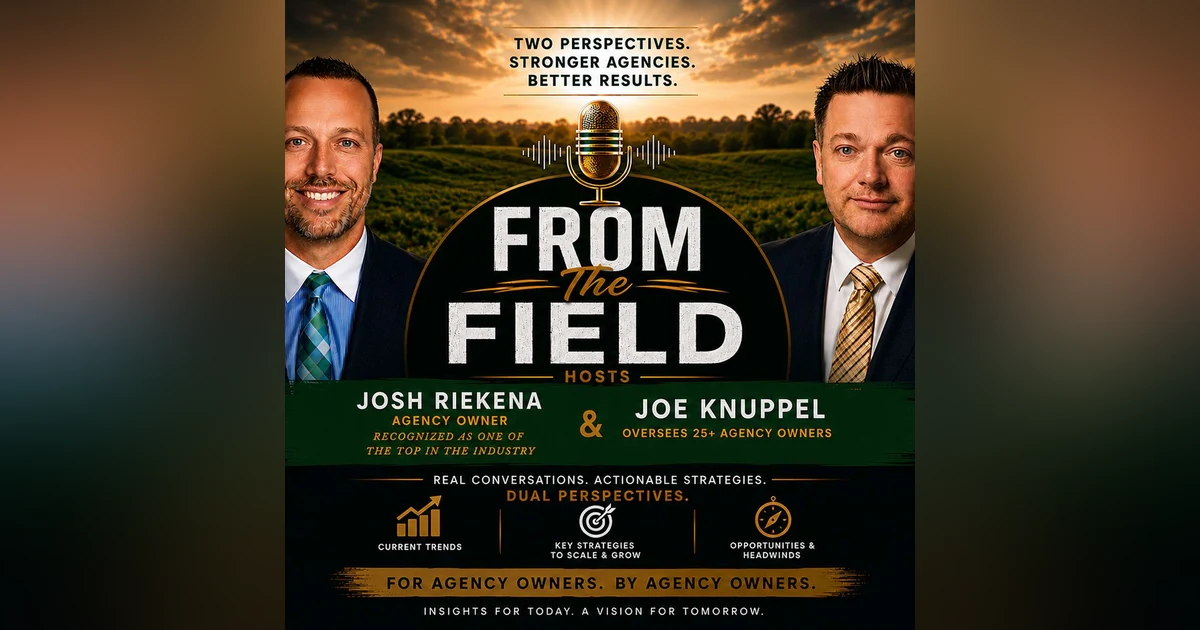

Josh and Joe are back, and this time they're answering YOUR questions. Real talk from real agency owners — no fluff, no corporate jargon, just straight answers from the trenches. In this episode: Joe D. from Las Vegas wants to know: can you scale up without losing the personal touch that got you here in the first place? Josh breaks down why the only constant is change, and why staying nimble beats resting on your laurels every time.Samantha from Madison, Wisconsin asks about burnout — and it ...


Josh and Joe are back, and this time they're answering YOUR questions. Real talk from real agency owners — no fluff, no corporate jargon, just straight answers from the trenches.
In this episode:
- Joe D. from Las Vegas wants to know: can you scale up without losing the personal touch that got you here in the first place? Josh breaks down why the only constant is change, and why staying nimble beats resting on your laurels every time.
- Samantha from Madison, Wisconsin asks about burnout — and it hits close to home. Joe and Josh get honest about the difference between burnout and needing a career change, why you need to surround yourself with winners (not Debbie Downer one-uppers), and how a 15-minute call with the right peer can flip your whole perspective.
- Kyle T. from Spokane, Washington asks about tools that actually move the needle. Josh goes deep on his best year ever — powered by a practice management operating system that cut his meeting times in half and saved his team 20+ hours a week. Plus: AI practice sessions for performance reviews (yes, really), and why consistency is like going to the gym.
Timestamps:
- 0:00 — Intro & Welcome
- 1:25 — Q1: Scaling vs. Personal Touch
- 3:39 — Q2: Overcoming Burnout
- 9:17 — Q3: Tools & Operations
- 18:14 — Closing & Contact Info
Got a question for Josh and Joe? Hit them up at ftfquestions@gmail.com or drop a comment on any of their social platforms. They check daily and read everything.
Being an agency owner isn't for the faint of heart. Strategy, market conditions, building a team that lasts. This is From the Field, where Josh and Joe help you do it all without losing your mind.
SPEAKER_00Hey there, and welcome to another episode of From the Field. I'm with my boy Josh Rickenaugh. Josh, how's the day? Rainy day here in the Midwest, but we're excited to get together. Very good. Just warning everybody going in. I've got a cough that kicks up about every time I talk. So if you see me muting my microphone, that's the reason. And I'll try not to be annoying. But uh Josh, you and I had talked. So we've gotten a lot of feedback from the viewers, which we I can't tell you how much we appreciate that because that's really the entire gist of the show is to make sure that we give you the best information we can. So what we're gonna start doing is every third or fourth episode, we're gonna have from the field question and answers. So we've taken questions that you have sent to us and we're gonna address those today. So a couple ways, if you want to reach out to us with questions, obviously, if you know Josh and I personally, you can reach out direct, but you also can go to FTF questions. So it's from the field questions, but it's FTFquestions at gmail.com, or you can post the question on any one of our platforms. We're checking those daily, and we'll make sure that we go get those addressed as well. So we really uh appreciate you taking the time and dropping those questions inside of the episodes. So starting off today, we've got three that we're going to touch on. The first one is gonna come straight out of Sin City. So representing Las Vegas, Nevada is gonna be Joe D. And Joe sent this question. I'm gonna read it directly. He said, companies in the industry are likely to change significant significantly over the next decade. How do you balance the scale and efficiency of a high volume operation with the personal attention and client care that have helped make your business successful? He said, I know you touched on this in a recent episode, but I'd be interested to hear whether you think your current model is built for the next decade or what you expect you'll need to change to keep growing. So I'm gonna kick that to you, Josh, but thanks, Joe, for sending that to us.
SPEAKER_01Yeah, friend of the program, happy to have uh Joe's question as one of the first ones. And and this was a really recent one we did, right? Talking about can you still stay, you know, as the agency name, agent name, and still be personal and still control it when you're growing? And I think you can, but to answer your question directly, it's gonna be constant change. Like to assume that our market and everything is gonna look the same 10 years from now is folly. Like the only constant is change, right? So we're always adapting, we're always looking forward to see how we can best put the client in the center of our universe and how we can build everything around it. So while I do think that right now we're in a good spot, you know, you don't want to be caught on your heels, right? You want to stay up there, stay active, stay ready to go, and be nimble in today's market.
SPEAKER_00Yes, I I think that's good. I think the other thing, too, you know, on my side, I see people that scale up effectively and they still keep the personal touch of the overall agency that they own. And I think, you know, just talking about that real quick, I think the other important thing is it's never been a more important time to stay on top of that. Because I do think you have competing forces out there that if if you're not making it personal and not doing a great job on the business side, you're gonna have to do both to stay relevant. So I think I think it's absolutely sustainable because we're seeing it year after year. But I think now more than ever, it's it's super important to have that personal touch to what you're doing. Absolutely. Absolutely. Very good. Well, thanks for the question. Second one that came in was from Samantha from Madison, Wisconsin. And she's Hey Midwest. Midwest represent, right? And she said, Have you ever battled feeling burnt out? This this question actually made me smile. And if so, how did you identify it and overcome it? So I'll start off, Josh, on this one. Um none of us, uh or let me change that, all of us that have been around any amount of time, I think have suffered extreme burnout at times. And I think there's a a couple things to look at. I think there are times where people come to a point in their career, not just with what we do, but with any career, to where they decide this is no longer for me, right? So it's not, it's actually not burnout, it's it's more than that. But that comes from the place of when you're dreading everything that has to do with your day-to-day activities and your career, right? That's that's a different animal where you say, look, I don't want to do this anymore. I don't want to go to the office. I'm dreading everything. It's Sunday, I'm dreading Monday. That's when you start to look at whether or not the career is the right one for you, which isn't a bad thing if it's not. But I think burnout is different. There's a lot of things that that can that can make that happen. Sometimes it's our own personal lives, sometimes it's our team and the team dynamics, sometimes it's things that corporate does that all of a sudden makes your job uh tougher to do. So you end up in tougher conversations with your clientele. All of those things can add to that feeling sometimes of um it's just tough to get through the day, right? And most of the time that's going to be temporary. So I can identify it myself when I look back and say, do I love what I'm doing? And there's a lot of times in my career I have said, I absolutely love what I'm doing. Right now I'm really having a hard time doing it. And to me, that that's kind of what burnout feels like. Josh, what are your thoughts?
SPEAKER_01Yeah, I mean, shoot, if you haven't experienced some form of it, I'm not sure you're you're doing it right. Uh, because I could tell you it's the old, are you driving fast to work? Right. Like when you get in the car, are you excited to get there? Is there something you're looking forward to accomplish? Or are you maybe taking the long route, you you're gonna stop and get a take of gas, even though you're three quarters full, uh, you know, maybe get a coffee. You're trying to find any other way than going into the office. If it's something like that and you're having that, I think you need to say, like, what is causing it? Is it a specific person? Is it a specific time? Is it, you know, a challenge? And then schedule time with yourself and with a mentor and somebody to talk about that, right? There's somebody else in the industry you can talk about. If it's a specific cause, then there's usually a solution. If it's just general, if you're just like, man, this is not what I want to be doing. That may be the actual answer. I mean, we've all seen great people come into this industry and not not be successful. There's a reason why the failure rate is what it is. But if you if it's if it's not just that, if it's not just this is not right for me, I think you just got to step back, identify, and and schedule some time to figure out a game plan to get yourself over that. Because usually, you know, when we look back at those periods of time, it was something that ended up not being as big of a deal as it as we thought it was. Like we built it up at that point. It was this was this big issue, either HR or personnel or you know, production, whatever it may be. We thought it was big. And when you look at it, you're like, oh man, I was a lot of stressed over something that ended up not being that bad.
SPEAKER_00That's exactly right. You know, the other thing you just brought up a really good point. When you look at our title or kind of description of what we do across the platforms, we mention the fact that this can be a lonely career, right? So the fact that you can go to a peer that you trust and you can say, hey, this is how I'm feeling, sometimes their perspective. You and you and I have done it with each other for two decades. There are times where I have felt a certain way and talked to you for 15 minutes and came out of there going, hey, okay. And all of a sudden I've got a totally different perspective. So I think having the right people around you, winners, people that are focused on how to win, um, especially when you're going through that, you don't want to get yourself around the people that say, Yeah, you're right. You think you think that's bad. Let me tell you a couple more things that even make it worse, right? Those are the people you want to avoid.
SPEAKER_01Debbie down or one uppers, right? Man, oh yeah. You think you have it bad. Here's another horrible thing that happened to me. And it's even worse than that. And we also suck in at all those kind of things. So look, our parents told us this, right? Show me the five people you spend your time around. I'm gonna show you your future. Like we talk to our kids about that. If you're around people that think the sky is falling and it's a doom, it is. Like you're right. Whether you think it's falling or you think it's going great, you're right. So surround yourself with great people, but there's resources out there. Like we've had people reach out to us since we started this. You know, we we didn't know if we were just yelling into a, you know, into a room doing this, but we've had people reach out. Hey, how about this? I got this thing going on. And and it's it's been good for you and for us, but it's also been good for the people that are that are reaching out. So, you know, phones always open, doors always open, we'd love to hear from you.
SPEAKER_00Last thing I want to say on that. I just saw an episode with Jay Shetty and Benny Blanco, and they were talking about this. And and really it makes you cognizant of it. And Benny Blanco was talking about, he said, if you know you're around the right people or you want to identify the people you're around, you'll have people send you social media posts or pictures or videos. You'll have one group that that constantly sends you making fun of things, and you'll have another group that sends you things working and celebrating wins. Working up, yep. Yeah, so it's really interesting to see who sends what, because most of the time you're the five you're talking about are sending things to to build you up and they're not trying to throw other people under the bus to feel better. So very good. I mean, it's the lens, right? It's it's what you're looking at it from. No doubt. So the last one came in from Kyle T out of Spokane, Washington. So there you go. Yes. So Kyle asked an operations question. Josh, I'm gonna kick over to you starting. And he said, What tools are you using to make you more effective as an agency owner? Is there anything that comes to mind that you feel like has really moved the needle for you?
SPEAKER_01Yeah, especially in this last year. Um I've probably had our best year ever in 26, which is which is odd in this economy and market. You know, it's it's one of those years where fundamentally we've really done excellent. I'm excited to have our underview meetings with our team. I'm excited to share, you know, not only in profit, but in in in how we've done. Yeah, we've really checked a lot of the boxes. And the tool that we adopted this year is through practice management operating system. Um I don't know if we can drop a link or I don't even know the technical side. Joe, you do all that, but it's a Troy Core's Gotten product that I've been using. And it's it's helped me on a lot of my pain points, things that I wasn't good at. You know, and and the main one has been the things that I thought took up too much time. Trevor Burrus, Jr. The biggest one is is my team meetings. You know, the the the weeklies, the quarterlies, the annual reviews, the the things that you do with your team in recognition and measurement that I just, you know, it's too easy to not do them or you feel like you're running an inefficient meeting. So inside of that software, in in it it's kind of like an agency in a box. You know, you you don't it's not tied to any specific company or independent or captive. And and what that tool, the team rhythm I'm talking about, has allowed me to kind of professionalize my weekly meetings with my team and really minimize all of the distractions that we don't need and just get to the optimal time that we need to do it. And it's it's been a huge, huge win for us on that.
SPEAKER_00It's gotta be a good system because if there's two things I know about you, you hate meetings and you hate voicemails. So if you're if you're gonna tell me that something you're excited about meetings, um next thing you're gonna tell me you're excited about voicemails, and I something's not right. Yeah. Well, here's what here's what I did.
SPEAKER_01The the sale to me, like I have to convince myself to do something, right? Whether it's go to the gym or to do something else, like you got to pitch yourself first. And and the meeting that that kind of started it was I knew I needed to get better about quarterly performance reviews, just a formalized standard of it. And Michelle Hubert does a great job in her teachings about you know a scale of one to five from you know underperforming to exceeding expectations and beating in the middle. And it allows you to kind of send this out ahead of time. They evaluate themselves, you evaluate them. It has some AI software that that lets you then go through and it says, hey, you're you're agreeing on this, you're not agreeing on this. You can actually practice with AI with your employee, giving the feedback before you go into that. And for me, like that's very helpful because you know, you're kind of worried about what the employee is gonna say if they're not if they're not exceeding, if they're not even meeting. So that's been very helpful. And that helped me kind of get better and keep them on the calendar. Like, hey, you already know. This is the Q3 review, it's coming up. It's gonna be this week. This is gonna come out to you a week ahead of time, you're gonna fill it out, I'm gonna fill it out, we get to see where it is, and measure against where we were, you know, 90 days ago. So that one was huge. But then the one that saved all the time. I've got two weekly meetings. I have my associate agency meeting with four people. It's usually an hour, it usually goes an hour 15. One of those meetings that like you schedule an hour and you know darn well it's man, it's never going an hour, it's always going a little longer. And what happened is I was able to send out what I need to each of the four. They're able to fill it out and get it back to me. We're cutting those meetings down to 30 minutes. So if you're saving 45 minutes for those four people, you know, hour and a half for every two, that's three work hours a week I'm saving out of one meeting. And I'm going, oh, okay. What else can I apply it to? I have a static meeting every Wednesday with Sam. Sam is my right hand in my agency. Couldn't do anything without her, you know, blessing to have her here. But that hour meeting was usually things that had accumulated from the week that I needed to give to her or show to her, and same thing for her to me. Okay. What we've been able to do is that meeting is now static on there. So we can load stuff into that and say, hey, this is in the parking lot, this is a topic, this is that. We're knocking out about half of it before we even get into the room. Because when I go in there to put something in, I notice she puts something in there, I'm like, oh, I can take that now. And I can put that as a task. That meeting alone, it's the two highest paid employees in the organization, right? Me and say if I save a half hour for each of us, there's a whole nother hour we're saving right there. And it just keeps going. We we estimate we're saving over 20 hours a week of personnel hours just by adopting this software and tools. So for me, it's been a glowing win. Um so if you are looking for tools and agency, the thing that has formalized a lot of mine is that practice management operating system. And I really love that team rhythm function. It's made me uh not, you know, want to drive slow on meeting day, right? Like it makes me want to get there and get them done. And I'm happy with what we're accomplishing and I'm happy writing the check uh for that time when I'm doing it.
SPEAKER_00Well, it sounds like a double benefit, right? You're you're now more efficient with your time, but it sounds like the actual meeting quality is even higher because you you're organized, which is huge. I see on the leadership side all the time with team members that um they don't run meetings with their teams. And it's because they tend to be they've obviously got competing priorities, right? There's a lot going on, but we know the importance of those meetings. They just don't really have a track to run on and they're not organized. So if they could have something that helped, you know, really streamline that, give them some of their time back, yet they could could run an effective meeting, that would be huge. The other piece you you mentioned, that AI, I've actually experimented with that now that you brought it up. To me, it's an unbelievable challenge because I'm blown away how real the AI is. So to sit there and like I've I've found myself, my wife seemed to get frustrated because of the pushback to where like I'm shutting it off and doing it again. I'm like, I'm gonna get them this time. But it it's amazing how it changes um your overall scripting and makes you more effective. And then you get great feedback. So I could see why that would make an enormous difference to you.
SPEAKER_01So what would you say, like out of the the scope that you you know manage and lead, like do you think half are running uh like a good meeting cadence? Is it is it higher than that? Is it lower? Because we know what it does if you get on a good cadence with your team and you stay on. The problems don't get big, right? Right. You solve them while they're still small. Is it half the people? Like, where are you at that you're seeing that run you know effective and consistent meetings?
SPEAKER_00I'm I'm gonna talk about the course of three overseeing three different teams, what I would say cumulatively. Um, so not just my specific team now, but I would say it's it's just north of 10%, maybe 20. But I would say one out of five. Um one out of five, if you said, tell me what day you hold your meeting, what's covered, how does this work? Say, well, we just we see each other a lot and we we talk all the time and we don't really have a formal meeting, but we're always in communication. That's the kind of response you usually get. But I would say, I would say it's not more than one or two out of 10 of all the agency owners that I've overseen.
SPEAKER_01Well, I've been doing this 20 years, and I think I can probably say there's been two times where I've consistently gone an entire year, you know, where I step to a schedule. True. So that's probably right in my I'm probably at 10% of the years that I've been in business, I've ran a true consistent, optimized, you know, meeting where the cadence is there, the team is there, and I stick to it. I don't just get off course or get busy or somebody's out of town, so we just skip it and it's easy to skip again. I mean, I I think it's like the gym, right? If you're consistent, it's gonna work.
SPEAKER_00It is. It is like the gym. And if you go to the gym three times and then you look at your results, you say, this isn't really making a difference, right? But all of a sudden you do it for for three months and you look up and say, Oh, I I want to keep doing this because now I'm seeing the fruits of my labor of uh making this a priority. I I think it's a great uh, you know, a great comparison.
SPEAKER_01Aaron Powell Yeah, I I was shocked when I looked back at like, what did we do different this year? You know, so we've we've won awards, we've you know, been ranked like you you know what we've done. But I look back and I'm telling you, 2026 will be my best fundamental year across every possible metric you can measure, whether that's households, whether that's premium, whether that's volume, whether persistency, retention, you know, client feedback, everything is this is the best consistent year we've ever had. And really the things that have changed were just consistency, I think, on a lot of this. And we formalized a lot of stuff this year, you know, using some of these tools we talked about. Like there is a plan, there's there, it's there, it's the framework, it's the guardrails, the bumper, bumper lanes to my bowling alley, right? Like these things that are keeping me stay between it when my natural inclination would be to get off course. So I really appreciate you said that one came in from Washington State. Like I did. I love that these are coming in from all over. And we appreciate that, but we're open to share whatever it is that's working. And I mean, that's kind of the the vibe of this anyway.
SPEAKER_00Yeah. And to end the session, I'll go back through it. So uh it's FTFquestions at gmail.com. You can just email us directly, reach out to either one of us individually if you know us. Uh otherwise, you can go to any of our platforms and post from the stand on on comments for any one of the videos, and we'll make sure that gets addressed. So it's really fun to build these out over your comments and what you need. It makes Josh and I both feel like we're doing um something that's worthy of doing. So we appreciate you. And Josh, with that said, anything you want to close with?
SPEAKER_01No, I appreciate the feedback. Thank you guys for reaching out. We're so happy to include you on the first uh from the field question and answer session. So that was a very fun one, and I'm glad we did it. Sounds great. Thanks again. Thanks, guys.